Posts

Showing posts with the label center for the environment

Summer Environmental Activities

Image
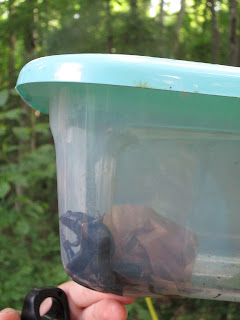
By: Delaney O'Connor Campers enjoy geocaching at the Stanback Ecological Preserve. Students got to kayak after completing all of the geocaching stations.  Julia Vaughan and Makayla Utt present their group's ideas for a more efficient dryer. In her off time, camper, Lexie Burns enjoys giant sized Jenga. Camper, Robby Cogburn, pulls a cage out of the water hoping to find turtles for focus group, A Backbone for Conservation. Dr. Poston explains to the campers how to determine whether the turtle is male or female. (Campers: Shauna Hendrie, Patrick Lowder, Evan Dorsi, and Dr. Poston) Focus Group, A Backbone for Conservation, caught turtles to examine. 

Kayaking and Canoeing on the Lake at Environmental Summit 2015

Image
Campers enjoyed a fun time kayaking and canoeing on the lake at the ecological, wildlife preserve behind the Center for the Environment at Catawba College in Salisbury, NC. Read more about hands-on geocaching with "Green Ink" (blogger group) camper Kayla Blackburn in her educational article on geocaching from earlier in the week. Here are some great photos of the event provided by summit counselor, Payden Mitchell.

Center for the Environment at Catawba College

Image
Waterfall at the Entrance for the Center for the Environment The Center for the Environment at Catawba College is a beautiful and restful place to learn about environmental issues. It is also a green-friendly structure that was designed to leave a small footprint on campus and has worn awards for being an excellent example of environmentally-conscious construction. The Center for the Environment at Catawba College is Tucked Into the Woods on Campus The Center was built into the woods on the edge of the wildlife preserve with green products like bamboo (which is quickly renewable). The structure features many earth friendly features like movement activated lights that turn on and off automatically. The Center for the Environment which is coordinated by Dr. John Wear often bustles with activity with a variety of classrooms, meeting rooms, a conference room, and a beautiful room for contemplation with a stone fireplace, but it is always an oasis where students, summer camper...

Group Shot at Redesigning the Future: Environmental Summit 2014

Image
High School Students, Counselors, Faculty, and Staff at Redesigning the Future Redesigning the Future: National Environmental Camp 2014 went by really fast. Our days were packed with lots of activities. We learned a lot and played hard too. Here is a final thought from one of our campers this year: “At the Summit, I loved being able to see all of the collaborative efforts between the students.   Our ability to find common interests and come together for a special purpose was amazing.   The people that I have met here are inspiring and I will never forget this experience.”   -Savannah Swinea Visit the Center for the Environment page for information about previous summits and be watching for opportunities for 2015. You'll also find loads of other projects and activities hosted by the Center. 

Focus Group Favorites

By Boothe Pfaff and Aydan Smith: During lunch, on Thursday, some campers answered questions about their favorite parts of the Stanback Reserve and the summit so far.   A:Stanback Reserve    B:The Summit Holly Kuhn - Backbone for Conservation A. "My favorite part was going on the trails and looking at all the wildlife there." B. "Going to our focus groups and studying everything that we have our interests in." Becan Hennighan - Backbone for Conservation A. "The variety of plants and animals that live there and the sheer beauty of the preserve itself." B. "Going out into the preserve and learning about the various animals that live in it." Amanda Williamson - Backbone for conservation A. "When we get to actually see and hold the birds as well as walk through the mud to set up turtle traps." "Its just so beautiful and you just feel one with nature." B. "Meeting new & interesting people and going throug...

Rocky Mountain Institute Sessions

Image
By Alia Dahlan Effective Communication and Collaboration Using clips from television shows, volunteers from the Rocky Mountain Institute taught us about how communication can be used to solve complex "wicked" problems. We learned a few communication terms: Downloading- not listening to others Debating- arguing one side with a strong view Dialoging- having a bias, but listening to the other side of the argument for new information Presencing- having no personal bias and focusing on the problem Grant Funding Activity We decided where to allocate $100k worth of grants at Catawba College . Dragon Fly Lake   We used a role-playing game to decide how to utilize a fictional lake and the area around it.

Stop Copying Me! : A Serious Spin on the Mimicking Game

Image
By: Katie Trischman What We Did   The Environmental Summit of 2013 began its first day in Catawba's 189-acre ecological preserve to study a subject called biomimicry. Don't worry; that term sounded foreign to us as well before we began our geocaching adventure. With only a map and a GPS, each group set out to find their own sequence of geocache stations and slowly discover the possibilities of biomimicry.  Biomimicry is taking inspiration from nature and solving current issues with these models from nature. It sounds so surprisingly simple, yet humans have remained trapped in their ways of doing things for thousands of years. Where do we look for our solutions, and how do we translate the natural world into industry? We not only found inspiration in each station but also all around us in the marshy woodland of Catawba's ecological preserve .   What We Learned   Our amphibious friend: the salamander Our trek through the reserve wasn't all mo...

Getting to Share What We Learned at the Summit

Image
Showcasing our Environmental Knowledge and Projects from the Week After a super busy week at Redesigning Our Future: Environmental Summit for High School students, groups spent Friday afternoon coming up with creative ideas to share what was learned and how we've all grown. There was a flurry across campus as we all tried to develop creative ways to capture the spirits of our various focus groups. Everyone was running here and there picking up poster boards, markers, tape, and various other odds and ends. Dr. Sue Calcagni Has a Safe Spot with a Good View in the Environmental Center   The view from above at the Center for the Environment at Catawba College was probably the safest spot with so much going on and only forty-five minutes to get things together and over to the Peeler-Crystal Lounge. You Need WHAT to Make WHAT? Every group had a different overall personality and work style. Some groups had traditional table discussions while others scattered a...

I'm On Turtle Time. Are You?

Image
By: Keela Sweeney Today I got the oppurtunity to accompany the "Animals Near and Far" group on their turtle tracking adventure! Students suited up and climbed into kayaks with satellites in hand so they could track where in the pond the turtles were. In the beginning of the week this group worked hard to catch up to six turtles inhabiting the pond and marsh areas around the Center for the Environment Nature Preserve here at Catawba College. Two huge snappers and four midsize to baby turtles were marked on Monday with trackers so that the students could go back and track them all today. And I was lucky enough to join the fun!  Emily and Josh using the radiotelemetric rod to find their marked turtles Having a great time out on the pond                                                               ...

Camper Spotlight - Zahra - Flying and the Environment

Image
Summit Camper Has a Passion for Aviation By Emma Sophia Zahra is a rising high school senior from Salisbury, North Carolina who is in the Environmental Education through Theater focus group at camp.  Previously, she has been part of her middle school's Green Team; the Green Team is a recycling program at her school that she says is not taken very seriously by teachers and students. Last fall, things for Zahra changed when she took AP Environmental Science. In the class she learned more about environmental issues and realized that there is a lot of help and change that needs to happen in the world, and she wants to be part of that change. Zahra also has a passion for aviation. Flying is something she has loved for a long time, and just this past year, she got her pilot license for her birthday. Because of her love for flying, she has long dreamed of being an aeronautical engineer. Now that she also pays more acute attention to environmental issues, she struggles with th...

We Love Our Nifty Reusable Summit Cups

Image
How to Drink the Environmentally Friendly Way By Emily Pieper On the first day we arrived here at Redesigning 2012 , each of us received a plastic cup (seen in the center of the photo above) to use throughout the week. What's neat about these cups is that they are reusable, and they can hold any kind of drink. This was a great idea, because every hour in America approximately 2.5 million plastic bottles are thrown away! Not only do these nifty cups help us stay hydrated throughout the day, but they allow us to be environmentally friendly in the process. The insulated, reusable drinking cups were donated for the "Redesigning the Future" summit for high school students by Rowan Regional Medical Center .

Resolution or Re-Solution? Use Technology for Change!

Image
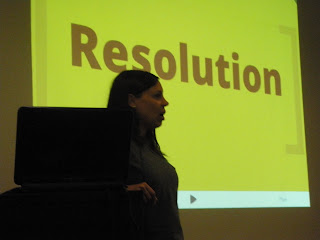
Communicating Your Initiative: Workshop by Amanda Lanier   By Emily Pieper Y esterday w hile I listened to Amanda Lanier teach us about effective environmental communication, another light bulb lit up in my brain when she showed the slide pictured below. Instead of just interpreting the word "resolution" as the ending or solving of a problem, I found myself looking at it in a whole new way. To me the word suddenly looked like "re-solution". Photo By: Emily Pieper <> N ow, maybe this doesn't seem like that big of a change, so let me explain my crazy thought. What I started to think was that "resolution" could also mean to come up with different ways to "re-solve" a problem. S o, why does this matter and why should you still read this? W hat Amanda explained to us was that today in the 21st century, thanks to new technologies that develop every day, we have thousands of ways to communicate our ideas. Right now as you ...