Posts

Showing posts with the label invasive species

Don't Hate Kudzu (well maybe) - Eating and Drinking Kudzu Does Help Ease the Pain

Image
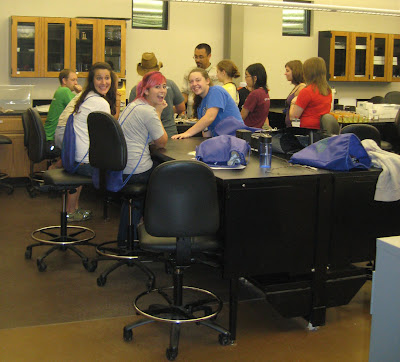
Students are Eager to Try Kudzu Food and Drink High school students in Dr. Jay Bolin's group Invasive Alien Plants and Animals: Friend or Foe to the Environment? always enjoy the kudzu class. Why? Well, they get to eat and drink kudzu concoctions.  Granted kudzu has a bad name, and it has certainly caused a lot of headaches for a lot of people. Brought in to counter soil erosion, this plant quickly became an invasive plant that would crawl over and tangle up plants, trees, and old broken down cars sitting in the field. Fighting it back has been like trying to stick your elbow in your ear. Given it's hard to impossible to do much about kudzu, students learn to make the best of a bad situation. The campers go out hiking and pick young kudzu leaves and then get to cooking. One favorite is fried kudzu leaves. Students make and eat these in their focus group meetings. The kudzu leaves are battered and deep fried. This is quite a southern tradition. Most anyone from t...

Water, Muck and Leeches!!!

Image
By Colleen Smiley The invasive species group ventured into the pond in the Preserve to look for the illusive Carolina paper shell mussel yesterday. The only way to find this bivalve was to bend way over and dig your hands into what felt like centuries of primordial ooze (since you can't see through the mud and muck) the only way to discover them was by touch. With a lot of crawling and feeling around, the group was able to discover six Carolina paper shell mussels. The laughter began when everyone discovered that the small "worms" were really little leeches!! Field work is amazing.

Fried Up - You Really Can Eat Kudzu

Image
By Lila Welsh When life gives you kudzu, fry it! The invasive species group has been trying some new ways to get rid of an invasive species. Kudzu is an invasive species. An invasive species is one that is introduced into an area and has no natural predators and is a generalized species, which means it can live in all kinds of environments. It seems nowadays in North Carolina that kudzu can be found in every forest. The kids in the invasive species group have found a way to help control the invasive kudzu. Eat it! The invasive plant is delicious when fried and is an innovative way to control a problem plant. The class is also thinking of preparing other kudzu dishes for the final festival such as kudzu salsa, kudzu quiche, and even a tenderloin with a kudzu sauce! "It's a bad plant that tastes good." -Grey Dorsett, Summit Camper   Photo by: Morgan King

We Did Eat Kudzu at Our Summer Summit

Image
You Will Never Guess What We Are Getting Ready To Do Dr. Jay Bolin and His Invasive Plants and Animals Focus Group Eating Kudzu By Rafaello I went to a unique Discovery Group on Tuesday. It combined poison ivy and deep-frying. (No, we didn't deep-fry the ivy). The discovery session was called "Invasive Species and Biodiversity: Eating the Plant that ate the South!" and was taught by Dr. Jay Bolin, a biology professor here at Catawba College. Dr. Bolin started out the session by talking about specific invasive species , what they are, and how they work. He then told us we were going to go pick some kudzu . After walking for about 15 minutes (of which the last 5 minutes was through a lot of poison ivy), we got to the kudzu. Kudzu is a nasty plant. It is a vine that grows extremely fast, and basically on anything. I saw some kudzu climbing up trees basically everywhere. We picked kudzu (while avoiding the poison ivy that was also everywhere). ...